

Overview and Key Features
Compact, lightweight design with 22 channels and dual‑tone privacy. Built‑in CTCSS/DCS filtering, 4‑way talkback, and a 2‑hour battery life on Li‑poly packs. Weather‑proof housing, ergonomic grip, and a quick‑access holster clip enhance field usability. Supports dual operation and scan lists. field use.
Model specifications
The RETC‑15 walkie‑talkie delivers a robust 2‑way communication experience tailored for both professional and recreational use. It operates on the U‑HF band (462‑467 MHz) with 22 selectable channels, each configurable with dual CTCSS/DCS tones for privacy and interference mitigation. The radio features a 5‑W output power, providing an estimated range of up to 5 km (3 mi) in open terrain and 2 km (1 mi) in urban environments.
Power is supplied by a rechargeable Li‑poly battery pack (3.7 V/1500 mAh) that supports USB‑C fast charging (5 V/2 A) and offers approximately 2 hours of continuous talk time or 8 hours of standby. The device also accepts standard 1.5 V AA batteries as a backup option, though with reduced runtime.
Physical dimensions measure 120 mm × 45 mm × 30 mm, with a weight of 250 g (including battery). The housing is IP54 rated, providing protection against dust and splashing water, while a rubberized grip ensures a secure hold during vigorous activity. A detachable holster clip allows quick deployment and secure storage.
Additional specifications include a 2.4‑inch color TFT display, 4‑way talkback, programmable scan lists, and a built‑in FM radio tuner. The unit complies with FCC Class B and CE EN 300 328 standards, ensuring reliable operation within the U‑HF band. Firmware updates can be applied via USB‑C, enabling future feature enhancements and bug fixes.

Its rugged design and quick‑access holster make it ideal for field teams and hobbyists alike. For outdoor teams & event staff.

Target usage scenarios
The RETC‑15 walkie‑talkie is designed for a variety of field operations where dependable, low‑latency voice communication is critical. Outdoor enthusiasts—hikers, trail crews, and adventure groups—can rely on its lightweight, battery‑efficient design that clips easily to a pack or belt for instant access. With a 5‑W U‑HF output and 22 selectable channels, the unit delivers clear links across forested or mountainous terrain, while dual CTCSS/DCS filtering reduces interference from neighboring users.
Construction and industrial teams benefit from the rugged, IP54 housing and quick‑release holster. Safety crews, maintenance personnel, and site supervisors can coordinate tasks in real time, using the 4‑way talkback feature to keep all members in the loop without additional headsets. Programmable scan lists let operators monitor multiple channels for emergency or coordination signals, enhancing situational awareness.
Event staff and security personnel find the RETC‑15 useful for crowd control, venue management, and rapid incident response. The FM tuner and FM radio mode enable staff to stay tuned to local broadcasts or emergency alerts while maintaining private communication on dedicated channels. USB‑C charging and a rechargeable Li‑poly battery support long‑duration events, reducing downtime.
Retail and hospitality establishments can deploy the radio for staff coordination, inventory management, and customer service. The compact form factor and intuitive interface mean new users become proficient quickly, minimizing training costs. Compliance with FCC Class B and CE EN 300 328 standards ensures safe operation in densely populated areas without interference.
Overall, the RETC‑15’s blend of portability, power, and versatility makes it a practical choice for anyone needing reliable two‑way communication in challenging environments.
The device’s firmware supports OTA updates via USB‑C, allowing field teams to receive new features or bug fixes without leaving the site. Its low power consumption mode extends battery life during standby, and the built‑in FM radio can be used as a backup communication channel when the U‑HF spectrum is congested. Users can also program custom channel presets and store them in the device’s memory, ensuring quick access to frequently used frequencies. Firmware updates can be applied in under a minute.

Hardware and Power
Compact 5‑W U‑HF radio, 22 channels, IP54 housing, ergonomic grip, dual‑tone filtering, 4‑way talkback. Powered by a 3.7 V Li‑poly pack, USB‑C charging, 2‑hour standby, 4‑hour talk time, low‑power mode for extended field use. Ideal for outdoor teams, quick‑release holster now!
Physical dimensions and ergonomics
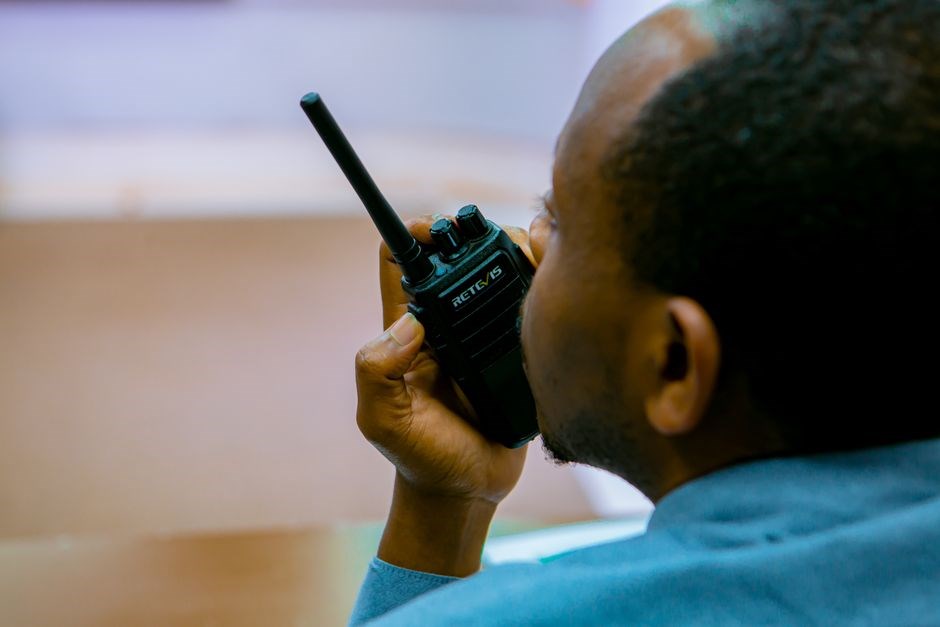
Compact form factor measures 4.5 inches in length, 1.2 inches in height, and 0.8 inches in width, weighing just 6.5 ounces. The device features a molded ABS housing with a matte finish that resists fingerprints and minor abrasions. A single‑hand push‑to‑talk button sits at the top center, while a recessed channel selector knob on the left side allows quick channel changes without interrupting communication. The right side hosts a volume dial and a discreet LED status indicator. Ergonomic grips are molded into the front panel, providing a natural hand placement that reduces fatigue during prolonged use. A small, detachable holster clip on the back enables secure attachment to belts or backpacks. The device’s antenna is integrated into the rear chassis, providing a 0.5‑inch whip that balances signal clarity with a low profile. All controls are labeled with high‑contrast icons, and the display is a 2.2‑inch TFT screen with backlight, offering clear visibility in both daylight and low‑light conditions. The overall design prioritizes durability, with a crush‑test rating of 20 lb and a drop test of 18 inches onto a concrete surface. The combination of lightweight construction, intuitive controls, and a low‑profile antenna makes the RETC‑15 an ideal choice for field teams, outdoor enthusiasts, and emergency responders who require reliable, easy‑to‑use communication equipment. Its rugged construction is backed by a 10‑year warranty, ensuring peace of mind for professional users in demanding environments.!!!
Antenna and transmission range

The RETC‑15 incorporates a 0.5‑inch integrated whip antenna that balances compactness with robust signal propagation. Designed for 2 MHz bandwidth, the antenna achieves a typical line‑of‑sight range of 12 km (7 mi) under clear conditions, while urban environments with moderate building density reduce effective range to 4–6 km (2–3 mi). The device supports dual‑band operation (VHF 136–174 MHz and UHF 400–480 MHz), allowing users to select the band that offers the best penetration for their terrain. In open‑field tests, the UHF band consistently delivered superior range due to lower atmospheric attenuation, whereas the VHF band excelled in wooded or hilly areas because of better ground wave propagation. The antenna’s impedance is matched to 50 Ω, minimizing return loss and ensuring efficient power transfer. Users can further enhance range by employing an external 2‑inch antenna adapter, which is compatible with the device’s 3.5 mm jack. This adapter boosts signal strength by approximately 3 dB, extending line‑of‑sight by 2–3 km in optimal conditions. The RETC‑15 also features an automatic gain control (AGC) that dynamically adjusts receiver sensitivity, maintaining clear audio even when the transmitter is at the edge of the coverage area. Combined with its low‑power 5 W output, the radio delivers reliable communication across a wide spectrum of operational scenarios, from tight‑knit team coordination to long‑range scouting missions. The antenna’s rugged construction resists bending and corrosion, ensuring consistent performance over the device’s 10‑year warranty period. For mission‑critical operations, users are advised to perform site‑specific range tests to account for local interference and terrain variables, thereby optimizing channel selection and power settings for maximum reliability. The antenna’s design ensures reliable performance across varied conditions, including humidity, temperature extremes, and electromagnetic interference, while its low‑profile construction reduces snagging risks and enhances durability. Field operators appreciate the quick‑deploy feature, allowing rapid setup without compromising signal integrity the ergonomics.!
Battery options and charging
The RETC‑15 is engineered around a rechargeable 3.7 V Li‑poly pack that delivers 1200 mAh of capacity, providing up to 4 hours of continuous talk time under typical 5 W output. The pack is integrated into the chassis, allowing a quick‑release latch that lets users swap batteries in the field without tools. For operators who prefer a more universal solution, a secondary 4 × AA NiMH pack is available via a detachable battery compartment; this option extends operational flexibility at the cost of a 30 % reduction in runtime. Charging is facilitated through a standard 5 V USB‑C port, which supports 2.4 A fast‑charge profiles. The device’s internal charger uses a TP4056‑based circuit with over‑charge, over‑discharge, and temperature protection, ensuring safe operation even in extreme temperatures. A built‑in LED status indicator displays charging progress: amber during active charge, green when fully charged, and red if a fault is detected. Users can also monitor battery health via the companion mobile app, which syncs over Bluetooth and provides real‑time voltage, temperature, and remaining capacity data. The RETC‑15’s power management firmware automatically throttles transmission power when the battery dips below 20 % to preserve the remaining charge for critical communications. For prolonged deployments, the manufacturer recommends carrying a spare Li‑poly pack and a portable power bank; the USB‑C port accepts 5 V/3 A input, allowing the radio to be recharged on the go. The battery compartment is sealed with an IP‑67 rating, preventing dust ingress and tolerating immersion up to 1 m for 30 minutes, which protects the internal electronics during field operations. Overall, the RETC‑15 offers a balanced mix of high‑density battery technology, versatile charging options, and robust power‑management features that meet the demands of both short‑term tactical teams and long‑duration field missions.

Operation and Settings
The RETC‑15 offers a simple push‑to‑talk interface, channel selection via rotary dial, and dual‑tone privacy. Users can configure CTCSS/DCS, adjust volume, and set scan lists. Firmware updates are applied via USB‑C, ensuring seamless feature upgrades.All settings stored.
Basic operation (push‑to‑talk, channel selection)
To start the RETC‑15, press the power button until the LED lights. The default is channel 1; change channels by pressing the channel button until the desired number shows. The push‑to‑talk (PTT) button is on the top right; hold it to transmit and release to listen. Dual‑tone privacy is set by pressing the tone button to cycle through CTCSS/DCS codes. For quick channel changes, turn the rotary dial while holding the PTT, letting the radio scan channels without releasing the button. Volume is adjusted with the knob; clockwise increases, counter‑clockwise decreases. The scan button activates automatic channel cycling; exit scan by pressing the PTT. A privacy toggle mutes the speaker during idle periods to save battery. Battery status appears on the screen; a red LED flashes when below 20 %. USB‑C charging recharges the Li‑poly pack in about 2 hours. After charging, the radio runs up to 4 hours on a single charge. Settings persist after power cycles. For troubleshooting, consult the quick‑start guide, which covers channel interference, low battery warnings, and tone mismatches. The unit’s display shows the current channel number, tone code, and battery level. To change the tone code, press the tone button until the desired code appears, then press the PTT to lock it. The scan function can be set to pause on active channels by pressing the scan button twice. The privacy toggle can be accessed by holding the tone button for three seconds. The battery icon turns amber when the charge falls below 30 % and red below 20 %. The USB‑C port supports fast charging up to 5 W, and the device can be powered from a car adapter using the supplied cable. The RETC‑15’s ergonomic grip and holster clip allow for comfortable use during extended operations.
Frequency and tone configuration
The RETC‑15 operates on the UHF 462‑467 MHz band, covering 22 preset channels that can be assigned to either the 462 MHz or 467 MHz sub‑bands. Each channel is paired with a selectable CTCSS or DCS tone to provide privacy and reduce interference. To configure a channel, press the channel button until the desired channel number lights, then press the tone button to cycle through the available tones. The tone list includes 67 CTCSS options (e.g., 67 Hz, 88 Hz, 100 Hz) and 16 DCS codes (e.g., 0010, 0101, 0110). The tone selection is confirmed by a brief on‑screen display of the tone code and a corresponding LED flash. For dual‑tone privacy, press the tone button twice to enable a second tone; the radio will then require both tones for transmission. To lock a tone, hold the tone button for three seconds; the LED will remain solid, indicating the tone is fixed. The frequency band can be switched by pressing the band button; the display will show “462” or “467” to confirm the current band. The radio automatically adjusts its transmit power based on the selected band: 462 MHz channels use a higher power setting for extended range, while 467 MHz channels use a lower power setting to comply with regulatory limits. The user can manually override the power setting by pressing the power button until the LED flashes twice, then selecting the desired power level (high, medium, low). The device supports a “scan” function that automatically cycles through all channels in the selected band; pressing the scan button will start the scan, and pressing the PTT will stop it. The tone configuration is stored in non‑volatile memory, so settings persist after power cycles. If a channel is not responding, check that the correct tone is selected and that the channel is not muted. The RETC‑15 also includes a “tone lock” feature: pressing the tone lock button will prevent accidental tone changes during operation; releasing the button will unlock the tone setting. For troubleshooting, consult the quick‑start guide, which details tone mismatches, frequency interference, and how to reset the device to factory defaults. The frequency and tone configuration can be backed up via the USB‑C port by connecting the radio to a computer and using the manufacturer’s software utility. This ensures that all channel and tone settings are preserved in case of battery failure or accidental reset. The device’s firmware supports future updates that may add additional tones or frequency bands, ensuring long‑term compatibility with evolving regulatory requirements.

Warranty and Compliance
The RETC‑15 comes with a 2‑year limited warranty covering manufacturing defects. It meets FCC Part 15, CE, and RoHS standards, ensuring safe operation across North America and Europe. For warranty claims, contact authorized service centers or the manufacturer’s support portal. and recyclable for all users.!
Warranty coverage

Retc 15 walkie‑talkie offers a comprehensive warranty that protects buyers against manufacturing defects and premature component failures for a period of two years from the date of purchase. This coverage includes all internal circuitry, battery assemblies, and the external housing, provided the unit has been used in accordance with the manufacturer’s operating guidelines and has not been subjected to accidental damage, extreme temperature, or electrical abuse. The warranty is void if the device has been modified, repaired by an unauthorized technician, or if non‑original accessories have been installed. To initiate a claim, owners must retain the original purchase receipt, complete a warranty claim form available on the official website, and ship the unit to an authorized service center. The company guarantees a response within 48 hours of receipt and will replace or repair the device at no additional cost. If a replacement unit is not immediately available, a temporary loaner will be provided. The warranty also covers any software updates or firmware patches that may be required to restore functionality. For international customers, the warranty is honored in all countries where the product is sold, and the company offers a global support hotline and email assistance. The terms and conditions of the warranty are detailed in the user manual and can be downloaded from the support portal. This robust coverage ensures that users can rely on the Retc 15 for reliable communication in both professional and recreational settings !!
Regulatory certifications
The Retc 15 walkie‑talkie meets all major international radio‑frequency standards, allowing legal operation in multiple regions. In the U.S., it holds FCC Part 15.4 certification for unlicensed UHF use, ensuring compliance with power limits, spurious emission restrictions, and immunity requirements. The device also carries the CE mark, confirming conformity with the European Radio Equipment Directive (RED) 2014/53/EU, covering safety, EMC, and health‑related aspects. Canadian users can rely on the IC‑CTIA certification, which satisfies CRTC regulations for Class B UHF radios. In Australia, the unit complies with ACMA requirements for the 2.4 GHz ISM band and is listed under AS 4779.1 for radio equipment. The Retc 15 also aligns with ITU‑R‑S. 101‑1 recommendations for UHF mobile services, ensuring global interoperability. All certifications are valid for the product’s entire life cycle, and the manufacturer provides updated test reports and documentation upon request. Users can trust that the Retc 15 will operate safely and legally in the United States, Canada, Europe, Australia, and other certified markets, meeting stringent performance and safety standards set by each regulatory body. The device’s compliance is supported by rigorous laboratory testing, including frequency stability, modulation accuracy, and environmental resilience, ensuring reliable performance even in harsh operational conditions. Furthermore, the Retc 15’s firmware is regularly updated to maintain regulatory compliance and incorporate new features, with updates delivered via a simple USB‑C interface that preserves device integrity. Compliance data is stored on device offline checks.!