

Article Plan: Electrician Interview Questions and Answers PDF
This guide details preparation for electrician interviews, covering technical skills, behavioral questions, and specific scenarios like generator/motor maintenance – all available in PDF format.
Landing an electrician position requires more than just technical expertise; it demands skillful interview performance. This article serves as your comprehensive resource, focusing on electrician interview questions and answers, conveniently compiled into a downloadable PDF format. We’ll explore the common question types – from foundational electrical theory to behavioral assessments – equipping you to confidently tackle any interview scenario.
Preparation is key. This guide isn’t just a list of questions; it’s a strategic tool. We’ll delve into how to structure your responses using the STAR method, highlighting your problem-solving abilities and practical experience. Whether you’re a seasoned professional or a newly qualified electrician, this PDF will sharpen your interview skills and increase your chances of success.
What is an Electrician Interview PDF?
An Electrician Interview PDF is a curated collection of frequently asked questions designed to prepare candidates for electrician job interviews. These documents typically encompass a wide range of topics, including basic electrical theory, practical skills assessment, behavioral inquiries, and questions specific to maintenance roles – like those involving electric generators and motors.
These PDFs serve as a portable and accessible study aid, allowing electricians to practice their responses and familiarize themselves with potential interview scenarios. They often include sample answers, providing insight into what employers are looking for. Utilizing such a resource streamlines preparation, ensuring candidates are well-equipped to demonstrate their knowledge and experience effectively.
Why Use a PDF for Interview Preparation?
Employing a PDF for electrician interview preparation offers significant advantages. PDFs are easily downloadable, printable, and accessible on various devices – smartphones, tablets, and computers – enabling study anytime, anywhere. They provide a structured format for reviewing common questions related to electrical systems, safety protocols, and troubleshooting techniques.
Furthermore, PDFs allow for focused practice without the distraction of internet browsing. They often contain example answers, aiding in crafting compelling responses using methods like the STAR technique. This concentrated approach boosts confidence and ensures candidates are thoroughly prepared to address technical, operational, and behavioral inquiries, including those concerning preventative and corrective maintenance.
Technical Electrical Knowledge
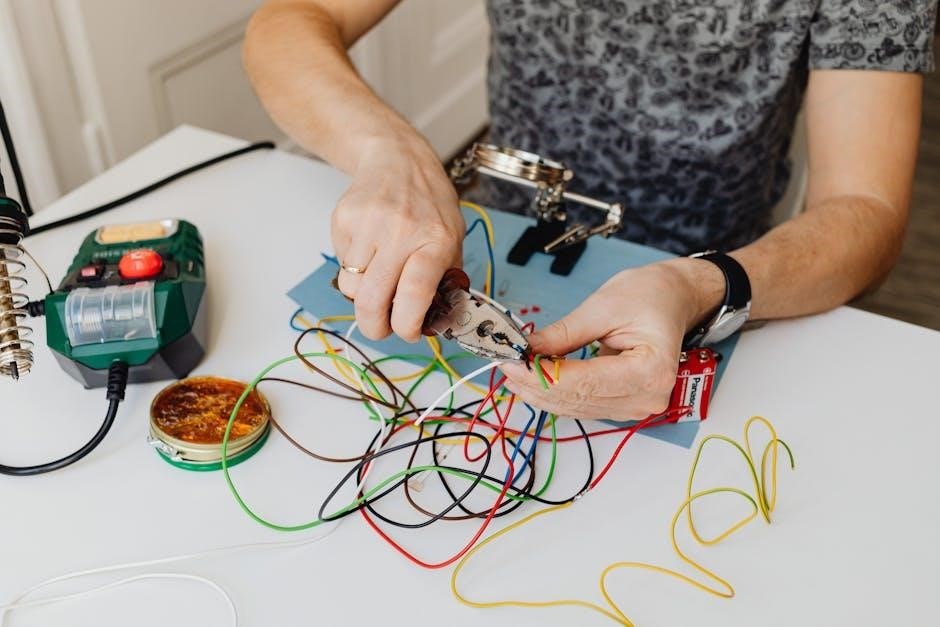
Assessments focus on core concepts: Ohm’s Law, series/parallel circuits, transformers, motor controls, and three-phase systems – crucial for any skilled electrical technician.
Basic Electrical Theory Questions

Expect foundational questions testing your understanding of electrical principles. Interviewers will likely probe your knowledge of voltage, current, resistance, and power – the core building blocks of electrical systems. Be prepared to define these terms accurately and explain their relationships.
Questions may also cover electron flow, the difference between AC and DC current, and the concept of electrical potential. A solid grasp of these basics is essential for demonstrating competence. For example, you might be asked what happens when two positively charged materials are brought together (they repel!). Understanding valence electrons – those in the outer orbit – is also frequently assessed.
Demonstrating a clear and concise explanation of these fundamental concepts will showcase your theoretical foundation as an electrician.
Ohm’s Law and its Applications
Ohm’s Law (V=IR) is a cornerstone of electrical theory and a frequent interview topic. Be prepared to state the law accurately and explain each variable: Voltage (V), Current (I), and Resistance (R). Interviewers will assess your ability to apply this law to solve practical problems.
Expect questions requiring you to calculate voltage, current, or resistance given the other two values. They might present scenarios involving simple circuits and ask you to determine the unknown quantity. Understanding how changes in resistance affect current flow, and vice versa, is crucial.
Be ready to discuss real-world applications of Ohm’s Law in troubleshooting and circuit analysis. Demonstrating practical application solidifies your theoretical understanding.
Series and Parallel Circuits Explained
A solid grasp of series and parallel circuits is essential for any electrician. Interviewers will likely ask you to differentiate between the two, detailing how components are connected and how current and voltage behave in each configuration.
For series circuits, emphasize that current remains constant throughout, while voltage divides across the components. In parallel circuits, voltage is constant, and current divides. Be prepared to calculate total resistance in both types of circuits.
Expect questions about the impact of adding or removing components in each circuit type. Understanding these concepts is vital for troubleshooting and safe electrical work. Practice explaining these principles clearly and concisely.
Understanding Transformers
Transformers are critical components in electrical systems, and interviewers will assess your knowledge of their function and operation. Be prepared to explain the principle of electromagnetic induction – how transformers transfer electrical energy between circuits without a direct connection.
You should confidently discuss the difference between step-up and step-down transformers, explaining how they alter voltage levels. Understand the concepts of turns ratio and its relationship to voltage transformation. Interviewers may ask about transformer losses and common transformer faults.
Demonstrate your understanding of transformer safety procedures and the importance of proper grounding. Knowing about different transformer types (e.g., isolation, autotransformer) is also beneficial.
Motor Control Systems ⸺ Basics
A solid grasp of motor control systems is essential for any electrician. Interview questions will likely cover fundamental components like motor starters, overload relays, and contactors – understanding their roles in protecting and controlling motors is key.
Be prepared to explain different motor starting methods, such as direct-on-line (DOL), star-delta, and auto-transformer starting, detailing the advantages and disadvantages of each. Familiarity with variable frequency drives (VFDs) and their applications is highly valuable.
Demonstrate knowledge of motor control schematics and the ability to troubleshoot common motor control issues. Safety procedures related to motor control systems are also crucial.
Three-Phase Power Systems
Electricians frequently work with three-phase power, so a strong understanding is vital. Expect interview questions assessing your knowledge of three-phase voltage, current, and power calculations – including delta and wye configurations.
Be prepared to explain phase rotation and its importance, as well as how to measure it. Understanding balanced and unbalanced loads, and their effects on the system, is crucial. Interviewers may ask about troubleshooting three-phase motor problems and identifying common faults.
Demonstrate familiarity with three-phase transformers and their connections. Safety procedures specific to three-phase systems are also essential knowledge.
Practical Electrical Skills
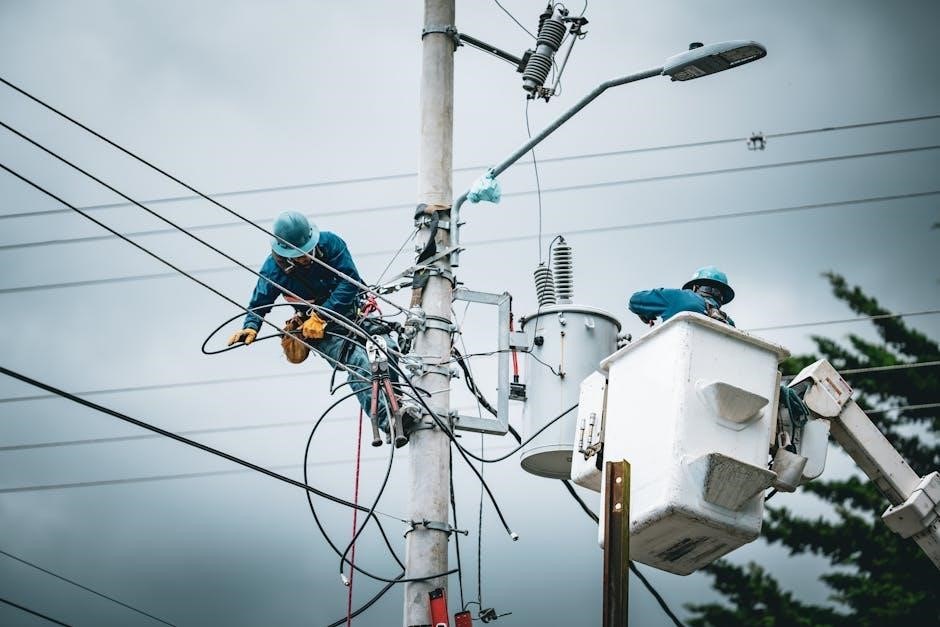
This section focuses on hands-on abilities: troubleshooting, wiring, schematic reading, multimeter use, and strict adherence to safety protocols like Lockout/Tagout procedures.
Troubleshooting Techniques
Effective troubleshooting is crucial for electricians, and interviews will likely assess your approach. Expect questions probing your systematic methods for diagnosing electrical faults. Interviewers want to know if you begin with visual inspections, checking for obvious issues like loose connections or damaged wiring.
They’ll also want to understand your ability to utilize testing equipment – multimeters, voltage testers – to pinpoint the source of the problem. Can you logically follow a circuit, interpret readings, and isolate the faulty component? Be prepared to describe a time you successfully diagnosed a complex electrical issue, detailing the steps you took and the tools you employed.
Highlight your understanding of common failure points and your ability to think critically under pressure. A strong answer demonstrates a methodical, safe, and efficient approach to problem-solving.
Wiring Methods and Regulations (NEC)
A solid grasp of the National Electrical Code (NEC) is paramount for any electrician, and interviews heavily emphasize this knowledge. Expect questions testing your understanding of acceptable wiring methods for various applications – conduit types, cable installations, and proper grounding techniques.
Interviewers will assess your familiarity with NEC articles related to safety, overcurrent protection, and conductor sizing. Be prepared to discuss specific code requirements for residential, commercial, and industrial settings. Demonstrating awareness of recent NEC updates is a significant plus.
Highlight your commitment to adhering to code regulations to ensure safe and compliant electrical installations. Knowing the importance of permits and inspections showcases professionalism and dedication to quality workmanship.
Reading Electrical Schematics
Proficiency in interpreting electrical schematics is crucial; interviewers will likely present you with diagrams to decipher. Expect questions about identifying components – transformers, motors, switches, and protective devices – and tracing circuit paths.
Be prepared to explain how to determine voltage, current, and resistance from a schematic. Understanding single-line diagrams, wiring diagrams, and control schematics is essential. Interviewers may ask you to troubleshoot hypothetical faults based on a provided schematic.
Demonstrate your ability to correlate schematic symbols with real-world electrical components. Highlighting experience with programmable logic controllers (PLCs) and ladder logic diagrams will be advantageous.
Use of Multimeters and Testing Equipment
Expect detailed questions regarding your experience with multimeters, including voltage, current, and resistance measurements. Interviewers will assess your understanding of proper meter selection for different applications and safety precautions when using testing equipment.
Be prepared to discuss other essential tools like clamp meters, insulation testers (meggers), and circuit tracers. Demonstrate knowledge of how to diagnose electrical faults using these instruments. Explain your understanding of continuity testing and its importance in troubleshooting.
Highlight experience with specialized equipment like thermal imagers or power quality analyzers. Knowing how to interpret readings and identify potential issues is highly valued.
Safety Procedures and Lockout/Tagout
Safety is paramount in electrical work; expect rigorous questioning on your knowledge of electrical safety procedures. Interviewers will probe your understanding of OSHA regulations and best practices for preventing electrical shock and arc flash hazards.

A significant portion will focus on Lockout/Tagout (LOTO) procedures. Be prepared to detail the steps involved in safely de-energizing equipment, applying locks and tags, and verifying zero energy state. Demonstrate a clear understanding of the importance of personal protective equipment (PPE).
Discuss your experience with hazard assessments and your commitment to maintaining a safe work environment. Knowing how to identify and mitigate electrical risks is crucial.

Behavioral Interview Questions
These questions assess soft skills, like problem-solving, teamwork, and handling difficult situations – crucial for electricians interacting with clients and colleagues effectively.
Handling Challenging Situations
Electricians frequently encounter unexpected problems on job sites. Interviewers want to know how you react under pressure and resolve conflicts. Prepare to discuss times you faced difficult clients, unexpected technical issues, or disagreements with coworkers.
Focus on demonstrating your ability to remain calm, analyze the situation, and find a practical solution. The STAR method (Situation, Task, Action, Result) is invaluable here. For example, describe a time a project faced a sudden roadblock due to faulty wiring. Explain the steps you took to diagnose the problem, collaborate with your team, and implement a safe and effective repair.
Highlight your commitment to safety and quality, even when facing tight deadlines or stressful circumstances. A strong answer will showcase your professionalism and problem-solving skills.
Customer Service Skills for Electricians
Electricians often interact directly with clients, requiring strong communication and interpersonal skills. Interviewers assess your ability to explain technical issues clearly, address concerns patiently, and maintain a professional demeanor. Prepare to discuss scenarios where you had to manage customer expectations or resolve complaints.
Emphasize your ability to build rapport and trust with clients. Explain how you ensure customers understand the scope of work, potential disruptions, and safety precautions. Highlight instances where you went above and beyond to provide excellent service, such as offering helpful advice or proactively addressing potential problems.
Learning how a candidate values customer service is crucial for company success. Demonstrate patience and a positive attitude, even when dealing with challenging individuals.

Teamwork and Collaboration
Electrical work frequently demands collaboration with other electricians, contractors, and building personnel. Interviewers will explore your capacity to function effectively within a team, share knowledge, and contribute to a positive work environment. Be prepared to detail experiences where you successfully collaborated on complex projects.
Highlight your ability to communicate clearly and respectfully with colleagues, even under pressure. Describe situations where you assisted a teammate, resolved conflicts constructively, or contributed to a shared goal. Emphasize your willingness to learn from others and share your expertise.
Showcase your understanding of the importance of coordination and mutual support in ensuring project safety and efficiency.
Problem-Solving Abilities
Electricians routinely encounter unexpected challenges and require strong analytical skills. Interviewers assess your ability to diagnose electrical issues, identify root causes, and implement effective solutions. Prepare to discuss scenarios demanding critical thinking and resourcefulness.
Utilize the STAR method to illustrate your problem-solving process: Situation, Task, Action, and Result. Describe a time you faced a complex electrical fault, detailing how you systematically investigated the problem, considered various options, and ultimately resolved it safely and efficiently.
Emphasize your ability to remain calm under pressure and think logically when troubleshooting. Highlight your commitment to finding lasting solutions, not just temporary fixes.
Dealing with Pressure and Deadlines
Electrical work often involves urgent repairs and strict deadlines, particularly in industrial or emergency settings. Interviewers want to gauge your ability to perform effectively under pressure while maintaining safety standards.
Prepare examples demonstrating your capacity to prioritize tasks, manage your time efficiently, and remain focused amidst distractions. Describe situations where you successfully completed critical electrical work within a tight timeframe, perhaps involving unexpected complications.
Highlight your ability to communicate effectively with supervisors and colleagues when facing challenges or potential delays. Emphasize your commitment to delivering high-quality work, even when time is limited, and your understanding of the importance of safety protocols.

Specific Interview Question Categories
Expect questions focused on operational tasks, preventative/corrective maintenance, and specialized equipment like electric generators and motors – crucial for technician roles.
Operational and Situational Questions
These questions assess your practical application of electrical knowledge. Interviewers will present scenarios demanding immediate problem-solving skills. Expect inquiries like, “Describe a time you diagnosed a complex electrical fault,” or “How would you approach a situation where a circuit breaker repeatedly trips?”
They aim to understand your workflow, safety consciousness, and ability to think on your feet. Be prepared to detail your step-by-step process, emphasizing adherence to safety regulations (NEC).
Situational questions might involve troubleshooting malfunctioning equipment or responding to emergency electrical issues. Demonstrating a calm, methodical approach and a commitment to safe practices is vital for success. Prepare examples showcasing your ability to handle real-world challenges effectively.

Questions About Preventative Maintenance
Interviewers will gauge your understanding of proactive electrical system care. Expect questions like, “What routine maintenance tasks should be performed on transformers?” or “Describe a preventative maintenance schedule for a motor control center.” They want to know if you prioritize preventing failures over simply reacting to them.
Be prepared to discuss tasks like thermal imaging, insulation resistance testing, and lubrication. Highlight your knowledge of industry best practices and relevant standards.
Emphasize the importance of detailed record-keeping and identifying potential issues before they cause downtime. Demonstrating a commitment to extending equipment lifespan and ensuring safety through preventative measures is crucial.
Questions About Corrective Maintenance
Interviewers assess your ability to diagnose and resolve electrical issues efficiently and safely. Questions might include, “Describe your process for troubleshooting a motor that won’t start,” or “How do you approach a situation with a short circuit?” Focus on a systematic approach – safety first, then isolation, testing, and repair.
Detail your experience with various testing equipment and your ability to interpret results;
Highlight your understanding of root cause analysis to prevent recurrence. Emphasize adherence to safety protocols and proper documentation of repairs. Show you can handle urgent situations calmly and effectively, restoring power with minimal disruption.
Electric Generator Interview Questions
Expect questions focusing on generator operation, maintenance, and troubleshooting. Interviewers may ask about your experience with different generator types (diesel, gas, etc.), Automatic Transfer Switches (ATS), and synchronization procedures. Be prepared to discuss common generator faults like voltage regulation issues or starting failures.
Demonstrate knowledge of generator safety procedures, including lockout/tagout and proper grounding techniques.
Highlight your ability to perform preventative maintenance tasks like oil changes, filter replacements, and inspections. Explain your understanding of generator load balancing and the importance of regular testing. Show you can interpret generator schematics and perform effective diagnostics.
Electric Motor Interview Questions
Prepare for questions assessing your knowledge of electric motor types, control systems, and troubleshooting skills. Expect inquiries about single-phase and three-phase motors, motor starters, overload protection, and variable frequency drives (VFDs). Be ready to explain common motor faults like winding shorts, bearing failures, and overheating.
Demonstrate understanding of motor safety procedures, including proper grounding and lockout/tagout protocols.
Highlight your experience with motor maintenance tasks like lubrication, alignment, and vibration analysis. Explain your ability to interpret motor schematics and use testing equipment like megohmmeters. Show proficiency in diagnosing and repairing motor control circuits.

Resources and Further Preparation
Utilize online PDFs and the STAR method to craft compelling answers. Practice common questions, focusing on behavioral examples and technical proficiency for success!
Where to Find Electrician Interview Questions PDF
Numerous online resources offer downloadable Electrician Interview Questions PDFs. Websites specializing in career preparation frequently host these documents, providing a convenient way to study. A quick search using keywords like “Electrician Interview Questions PDF” or “Top Electrical Interview Questions” will yield several options.
Specifically, documents detailing questions for Maintenance Electrical Technicians are available in formats like Word (.doc/.docx), PDF (.pdf), and Text (.txt). Platforms offering comprehensive lists, such as those containing 75 or even 100 questions, are particularly valuable. Remember to evaluate the source’s credibility and ensure the questions align with the specific role you’re applying for. Printable PDFs are ideal for offline study and focused preparation.
Utilizing the STAR Method for Answers
The STAR method is crucial for crafting compelling behavioral interview responses. STAR stands for Situation, Task, Action, and Result. Begin by describing the Situation – the context of your experience. Then, outline the Task you were assigned or needed to accomplish. Detail the specific Action you took to address the situation, focusing on your contribution.
Finally, clearly state the Result of your actions, quantifying it whenever possible. Many electrician interview question PDFs emphasize behavioral questions, and utilizing STAR demonstrates structured thinking and problem-solving skills. Example PDFs often showcase answers using this method, providing a template for your own responses. This technique ensures you provide complete and impactful answers, showcasing your capabilities effectively.
Final Tips for Success
Thorough preparation is key! Review common electrician interview questions and answers PDFs, focusing on both technical knowledge and behavioral scenarios. Practice articulating your experience using the STAR method – structure is vital. Dress professionally and arrive on time, demonstrating respect for the interviewer’s time.
Research the company beforehand, understanding their projects and values. Be prepared to discuss safety procedures and your commitment to adhering to the NEC. Don’t hesitate to ask clarifying questions; it shows engagement. Finally, project confidence and enthusiasm – a positive attitude can make a significant difference. A well-prepared candidate significantly increases their chances of success.